News Articles

Minnesota’s jobs recovery uneven across industries, but everyone agrees more workers needed

By July 20, 2022December 23rd, 2025No Comments
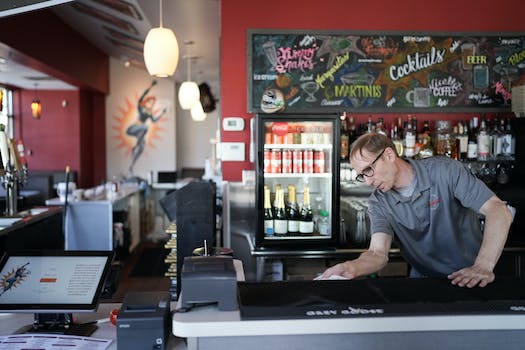
bartender cleaning equipment

The June jobs report, which will be released Thursday, will provide most recent snapshot of recovery progress.

By Kavita Kumar Star Tribune


Bad Waitress general manager Brian Danich took advantage of the restaurant’s reduced hours to catch up on maintenance and cleaning last week.

More than two years since the onset of the pandemic, a handful of industries in Minnesota have seen a full recovery of jobs. Most, though, still have a ways to go.

So QR codes at restaurants, shortened hours, and in some cases fewer days of operation are still a facet of life for some Minnesota businesses.

“We need to make sure we’re taking care of our existing talent and not running them ragged and burning them out,” said Elizabeth Morrissey Brown, a vice president for Morrissey Hospitality, which manages several restaurants, hotels and event spaces around the Twin Cities.

The leisure and hospitality, education and health services sectors, as well as retail, still have a lot of lost ground to make up to recover the jobs lost in the pandemic. The construction, manufacturing and professional and business services fields have now surpassed pre-pandemic levels of employment.

No matter how the data stacks up, though, pretty much every sector is hurting for workers.

“It’s not that we’re not creating jobs,” said Steve Grove, commissioner of the Minnesota Department of Employment and Economic Development (DEED). “It’s not that we’re not hiring. It’s that we’re struggling to fill them at the rate we need to. And that’s holding us back.”


The state’s jobs report for June will be released on Thursday, providing the most recent snapshot of the rebound since the loss of 417,600 jobs in the initial months of the pandemic.

As of May, the state had regained about 85% of private-sector jobs. That amounts to about 57,000 jobs still missing in the state’s economy — 82,000 jobs if you also include government jobs.

That stands in contrast to the nation as a whole, which hit a significant milestone last month. The U.S., while still down in government jobs, has now fully recovered private-sector positions.

So why is Minnesota lagging behind?

Grove pointed to a few factors, including the state’s especially tight labor market. Minnesota has the fifth tightest labor market in the U.S., with about twice as many job openings as unemployed people. At 2%, it also has the second-lowest unemployment rate in the nation.

In addition, Minnesota got hit hard by a second wave of COVID-19 in the fall and winter of 2020, which led to a second round of state shutdowns and a bigger hole to dig out of.

“But I think the good news is the last six months we’re outpacing the U.S. pretty significantly,” he said, pointing to 1.6% job growth in Minnesota in the first five months of the year compared with 1.3% for the U.S.

With a workforce that skews slightly older than the rest of the U.S., some state officials think Minnesota also got hit harder by a wave of early retirements during the pandemic. By one estimate, the pandemic spurred about 60,000 Minnesotans to retire. About half of those workers have since returned to work, Grove said.

Minnesota also saw more people leave the state last year. An estimated 13,000 people moved to other states. In a typical year, the state loses about 4,000 people to domestic migration, said Susan Brower, the state’s demographer.

Immigration from other countries, which usually makes up for the domestic losses, also dropped last year.

Also, while wages have been rising in Minnesota to lure more workers off the sidelines, they are not moving as fast as in the nation as a whole.

Wages are also probably a reason why some industries in Minnesota have recovered faster than others, said Angelina Nguyễn, research director for DEED’s labor-market information office.

“The industries that traditionally pay lower, we have seen them struggle more to get workers,” she said. “Those are also the same industries where we see the highest wage growth because the employers are really trying hard to attract workers.”

Here’s a look at the jobs recovery in a few industries:

Leisure and hospitality

Nearly half of the private-sector jobs still missing in the state are in leisure and hospitality, which was the industry hardest hit by job losses at the beginning of the pandemic.

The trade group Hospitality Minnesota estimates that as many as 90,000 workers left the industry during the first and second shutdowns in 2020.

“They likely made lateral moves to other work in order to keep a steady paycheck coming in, given the uncertainty in the industry in general,” said Ben Wogsland, the group’s executive vice president.

As demand has picked up in the past year, many restaurants and other operators, eager to hire workers, have been having a hard time finding them even as they raise wages and offer referral bonuses.

Many also have added technology to help fill gaps.

The Bad Waitress in Minneapolis started using QR codes for ordering and paying a few months after the first shutdown in 2020, said Brown of Morrissey Hospitality, which manages the restaurant.

It made sense since the restaurant already had a more limited service model. Guests previously ordered via a notepad. But QR codes are not a one-size-fits-all solution, with some restaurants requiring higher levels of customer service, she said.

“We have no plans for doing this at the St. Paul Grill, for example,” she said. “That is a different type of dining experience.”

At Bad Waitress, staffing the back of the house — the kitchen — remains the biggest problem. That’s why the restaurant recently started closing on Tuesdays and Wednesdays.

Retail

Minnesota’s retail sector has recovered about 85% of the jobs it lost in the first months of the pandemic.

The employment crunch in retail doesn’t seem as severe as it did a year ago, said Bruce Nustad, president of the Minnesota Retailers Association. “But we definitely could use a few more employees.”

The industry, which has been raising wages, lost some workers to other lines of work such as manufacturing. But some workers seem to be coming back, he said, lured by more flexible hours.

Down in the Valley, a record store with locations in Golden Valley, Crystal and Maple Grove, is at full staff for the first time since the pandemic.

“We’re back now, but it just seems volatile still,” said Scott Farrell, the company’s general manager.

Even with full staff, the retailer is sticking with slightly shortened hours put in place to deal with the previous staff shortage.

“We just found out that kind of works for us,” Farrell said.

Manufacturing

Employment in the state’s manufacturing industry rebounded to above pre-pandemic levels in March.

“Manufacturing has definitely been blessed with demand,” said Steve Kalina, president of the Minnesota Precision Manufacturing Association, nodding to strong consumer spending and snarled-up supply chains abroad.

While the industry has an aging workforce and saw some retirements in the pandemic, it didn’t see as many people leaving for other career paths, he said.

Still, hiring was a challenge before the pandemic — and it still is. Many companies are still looking to hire more to handle an uptick in orders. Employers have been raising wages.

“You’re seeing positions that might have been starting out of tech school at $22 to $24 an hour that are now $30 an hour,” Kalina said.

NTM, a small manufacturer in Fridley, is now about even in staffing with where it was when the pandemic hit, said Vickie Parks, director of business development.

The company has been working with a recruiter who helped find six younger employees who are fairly new to manufacturing. One didn’t work out, but the others are still at NTM.

Parks would like to hire a couple more workers this year if she can, especially since business is booming and a few workers are on the cusp of retirement.

“I don’t have a crystal ball, but the demand is not going away,” she said.

Richard Dobransky

President & CEO

Richard joined Morrissey Hospitality as President in 2018 and accepted the role of CEO in 2023. Under Richard’s leadership, the organization implemented best-in-class solutions to support its hotel, restaurant, and events venue portfolio. He spearheaded efforts to upgrade all internal systems, embrace automated workflows and data analysis, and streamline every aspect of the organization for real-time, accurate reporting and accountability.

Focusing next on the employee experience, Richard oversaw a restructuring of employee compensation to ensure that every Morrissey employee earns more than a living wage. With his team, he improved employee benefits packages and ushered in numerous new initiatives to reflect the needs of employees and promote better work-life balance.

Under Richard’s leadership, the Morrissey portfolio has grown from 5 to 18 owned and managed properties. He oversees a team of over 100 managers and 1,000+ employees, leads efforts to provide authentic hospitality experiences at every location, and is an active coach and mentor to many.

Well respected and highly regarded throughout his career, Richard enjoys annual recognition in the Minnesota Top 100 and Top 500 Business Leaders list, and was named among Minneapolis/St. Paul Business Journal’s 2026 Most Admired CEOs. He serves on the Board of Directors for Visit Saint Paul and The Downtown Saint Paul Alliance.

Richard intrinsically understands the communities he serves, helping to create hospitality concepts that serve as long-lasting, meaningful gathering spaces. He aims each day to make, do, and be better for Morrissey customers, employees, clients, partners, vendors, and community members alike.

Elizabeth Morrissey

Senior Vice President

As Senior Vice President and Chief Growth Officer at Morrissey Hospitality, Elizabeth leads the company’s growth strategy with a focus on business development, strategic partnerships, and brand expansion. With nearly a decade of internal leadership experience and deep roots in hospitality, she drives new revenue opportunities, cultivates client relationships, and strengthens the company’s presence in new and existing markets.

Elizabeth began her career at The Saint Paul Hotel before taking on leadership roles at the Waldorf Astoria New York, Johnson Brothers Liquor Company, and Moet Hennessy. She returned to Morrissey Hospitality to help shape the company’s next chapter, progressing quickly from operations into business development. Her background spans hospitality operations, marketing, human resources, and sales strategy — making her uniquely positioned to scale the organization’s impact while preserving our guest-first, people-focused culture.

Elizabeth’s leadership is grounded in purposeful growth: building high-performing teams, elevating client brands, and delivering exceptional service across every property in the Morrissey Hospitality brand portfolio.

Paula Soderberg

Vice President of Human Resources

Paula is a results-driven professional with comprehensive and extensive human resources experience. She is well-versed in labor relations, employee relations, retention, training and development, HRIS, compensation and benefit management, domestic and international recruiting, job description development, HR audits, unemployment hearings, worker’s compensation claim management, and risk and safety management. She is also well versed in Def Leppard — so don’t mention the band unless you want her to talk your ear off.

Paula’s experience helps her foster an optimal working environment through development and deployment of new strategies in recruiting, onboarding, training, job description and standards, benefit administration, and employee development. She is a versatile and motivated leader, with proven communication and organizational skills. She is practical, articulate, and creative with a demonstrated ability to solve difficult issues.

Paula started in hospitality while a teenager at her family’s restaurant in Stillwater, MN. She continued to work FOH positions while in college pursuing her HR degree (don’t ever let her work BOH. She can’t cook…at all.) She understands operations, allowing her to support management and coach employees effectively. She also has held many HR management roles within healthcare, insurance, telecommunications, and government, but hospitality is her home.

Keith Reardon

Vice President

Keith is a hospitality management professional with 30+ years of experience leading food & beverage operations for hotels, restaurants, golf courses, and sports & entertainment facilities. His peers describe him as a high-capacity, intuitive, creative, thoughtful, and disciplined leader. With years of industry knowledge and experience in multifaceted hospitality environments, he routinely demonstrates strength in strategically building high-performance teams, resulting in stable revenues and profits.

Before joining Morrissey Hospitality, Keith held positions with Ritz Carlton Hotels in Palm Springs, before moving on to Centerplate, where he operated the Colorado Convention Center and opened Seattle’s T-Mobile Park. Keith’s passion is restaurant and kitchen design and construction. He recently completed the design and construction of all the hospitality components at Morrissey’s newest location, Tattersall Distillery in River Falls, Wisconsin. Keith is active in the Twin Cities community, serving as Treasurer on the Executive Committee for the Hospitality Minnesota’s Educational Foundations Board, and as an advisor to Visit Saint Paul.

Johnessa Hardyman

Vice President of Finance

Johnessa has always had a passion for finance and accounting. She started her career in community banking and completed her bachelor’s degree in accounting before finding a passion for hospitality in 2012 at The Saint Paul Hotel. Johnessa spent two years working onsite at The Saint Paul Hotel before transitioning to the Morrissey Hospitality Shared Services Office.

Johnessa Hardyman brings over a decade of expertise in hospitality finance to her role as Vice President of Finance at Morrissey Hospitality. Since joining the company in 2012, she has held key leadership positions, including Senior Accountant, Controller, and Director of Financial Planning and Analysis. Johnessa’s extensive experience spans budgeting and forecasting, cash management, internal and external audits, system transitions, and acquisitions.

With a Master of Science in Accountancy from Saint Mary’s University, Johnessa excels at leveraging financial data to drive informed decision-making. She leads the accounting team with a focus on accuracy, efficiency, and strategic planning, ensuring that financial insights translate into actionable business strategies. Passionate about financial forecasting, she thrives on analyzing how businesses actualize their projections and the impact on cash flow. Her deep understanding of both finance and hospitality makes her an invaluable asset to the organization and its clients.

Amy Houston

Vice President of Marketing & Communications

A Professional Certified Marketer (PCM) with a deep passion for hospitality, Amy blends creativity with strategic vision to build meaningful connections between brands and guests. Her expertise in brand development, campaign execution, and revenue-focused marketing continues to shape Morrissey Hospitality’s growth and industry leadership. Known for her empathetic leadership style, she fosters collaboration and inspires those around her to think bigger and work together to bring bold ideas to life.

Amy Houston brings over 20 years of experience in marketing, hospitality, and sales. Since joining Morrissey in 2020, she has led strategy for 18 independent brands, driving measurable success through data-driven campaigns and innovative storytelling. Under her leadership, the company has transformed its marketing operations, bringing services in-house and streamlining digital platforms to create a more cohesive, results-driven approach.

Callie Kiepke

Vice President of Operations

Callie Kiepke is Vice President of Operations for Morrissey Hospitality, bringing more than a decade of leadership experience across event venues, restaurants, and golf course operations. Known for building strong teams and implementing effective, scalable processes, she plays a key role in driving consistent performance across the organization.

Callie began her hospitality career at 18 and earned a degree in Hospitality Management from the University of Wisconsin–Stout. After nearly ten years with TPC Twin Cities, she joined Morrissey Hospitality at Bunker Hills Event Center, where she advanced from Catering Sales Manager to Director of Catering and later General Manager. Under her leadership, Bunker Hills became one of the company’s top-performing properties.

In addition to her work at Bunker Hills and Kendall’s Tavern & Chophouse, Callie has supported operations at Stockyards Tavern & Chophouse, played a key role in the opening of Dawn Manor, and is instrumental in strengthening private dining operations. As Vice President of Operations, she leads menu development, systems strategy, and process standardization, with a focus on continuous improvement and exceptional guest experiences.

Name(Required)
How should we contact you?
Services Needed(Required)
Check all that apply
Tell us about your business needs and purpose for reaching out.

This site is protected by reCAPTCHA and the Google Privacy Policy and Terms of Service apply.